
Auditory Processing Disorder
You or your child may hear sounds clearly but still struggle to understand what was said. This can happen during conversations, classroom lessons or spoken instructions. Background noise often makes the difficulty more noticeable.
Big Thicket Hearing Aids & Audiology helps children and adults understand why listening may feel harder than expected. Our Lumberton audiologist looks beyond basic hearing levels to examine how the brain processes spoken information. This can help explain problems that a standard hearing test may not reveal.

What Is Auditory Processing Disorder?
Auditory processing disorder, also called APD, affects how the brain makes sense of sound. The ears may detect speech normally, but the brain has trouble organizing or interpreting what was heard. This can create a disconnect between hearing the words and understanding the message.
People with APD often have normal hearing and normal cognitive abilities. Their difficulties may become more noticeable when speech is fast, several people are talking or directions contain multiple steps. Noisy settings can make the problem even harder to manage.
Common Signs of APD
APD can affect each person differently. Some people struggle to recognize speech sounds, while others have trouble remembering or organizing spoken information. Several listening skills may be affected at the same time.
These signs can also appear with attention, language or learning concerns. That overlap can make it difficult to know what is causing the problem. A complete evaluation helps determine whether auditory processing may be involved.
Common signs may include:
- Frequently asking people to repeat themselves
- Struggling to understand speech in background noise
- Responding slowly to spoken language
- Forgetting instructions or other spoken information
- Having difficulty with reading, spelling or articulation
Types of Auditory Processing Difficulties
Auditory processing depends on several skills working together. Big Thicket Hearing Aids & Audiology uses four categories to describe where problems may occur. A child may show signs from more than one area.
Auditory decoding:
Trouble recognizing and processing speech sounds quickly. Signs may include spelling problems, slow responses, articulation difficulties, trouble reading aloud or difficulty following spoken instructions.
Auditory memory:
Difficulty understanding speech in noise while also holding onto what was said. Signs may include distraction, anxiety in noisy places, noise sensitivity, interrupting, responding too quickly or forgetting spoken information.
Auditory integration:
Trouble bringing auditory and visual information together. Signs may include poor handwriting, long delays before responding, difficulty combining what is heard and seen or a diagnosis of dyslexia.
Auditory organization:
Difficulty keeping information in the correct order. Signs may include trouble sequencing verbal information, losing belongings, struggling with organization or keeping a messy room, home or work area.
These behaviors are sometimes mistaken for carelessness, poor attention or lack of effort. In some cases, the person is working hard but cannot process the information quickly enough. Testing helps show which auditory skills may be contributing.
How APD Can Affect Children
Children rely on listening throughout the school day. They must follow instructions, understand new words and learn while other students are moving or talking. A child with APD may need more time to process the same information.
Parents or teachers may notice frequent requests for repetition, delayed responses or difficulty following verbal directions. The child may also watch classmates before beginning a task or do better with written instructions. These patterns can affect reading, spelling, classroom participation and confidence.
APD does not look the same in every child. Some children struggle most in noisy classrooms, while others have more trouble with memory or sequencing. A complete evaluation looks at the child’s specific listening difficulties.

How APD Can Affect Adults
Adults can also experience auditory processing difficulties. Some have struggled since childhood without knowing why, while others notice problems later. Work meetings, phone calls and group conversations may become especially difficult.
An adult may hear each word but lose the meaning as the conversation continues. They may rely on captions, written follow-ups or watching the speaker’s face. These strategies can help, but they do not explain why listening remains difficult.
APD can affect work, relationships and social activities. Busy settings may feel exhausting because following conversation requires extra effort. Testing can help connect those experiences with specific auditory skills.
How APD Testing is Different From a Hearing Test
A standard hearing test measures the softest sounds someone can hear. It can identify hearing loss and other concerns within the hearing system. However, it does not show how the brain handles complex spoken information.
Someone with APD may hear quiet tones without difficulty. Problems may only appear when speech is fast, unclear or mixed with background noise. Additional testing examines these more demanding listening situations.
What Happens During an APD Evaluation?
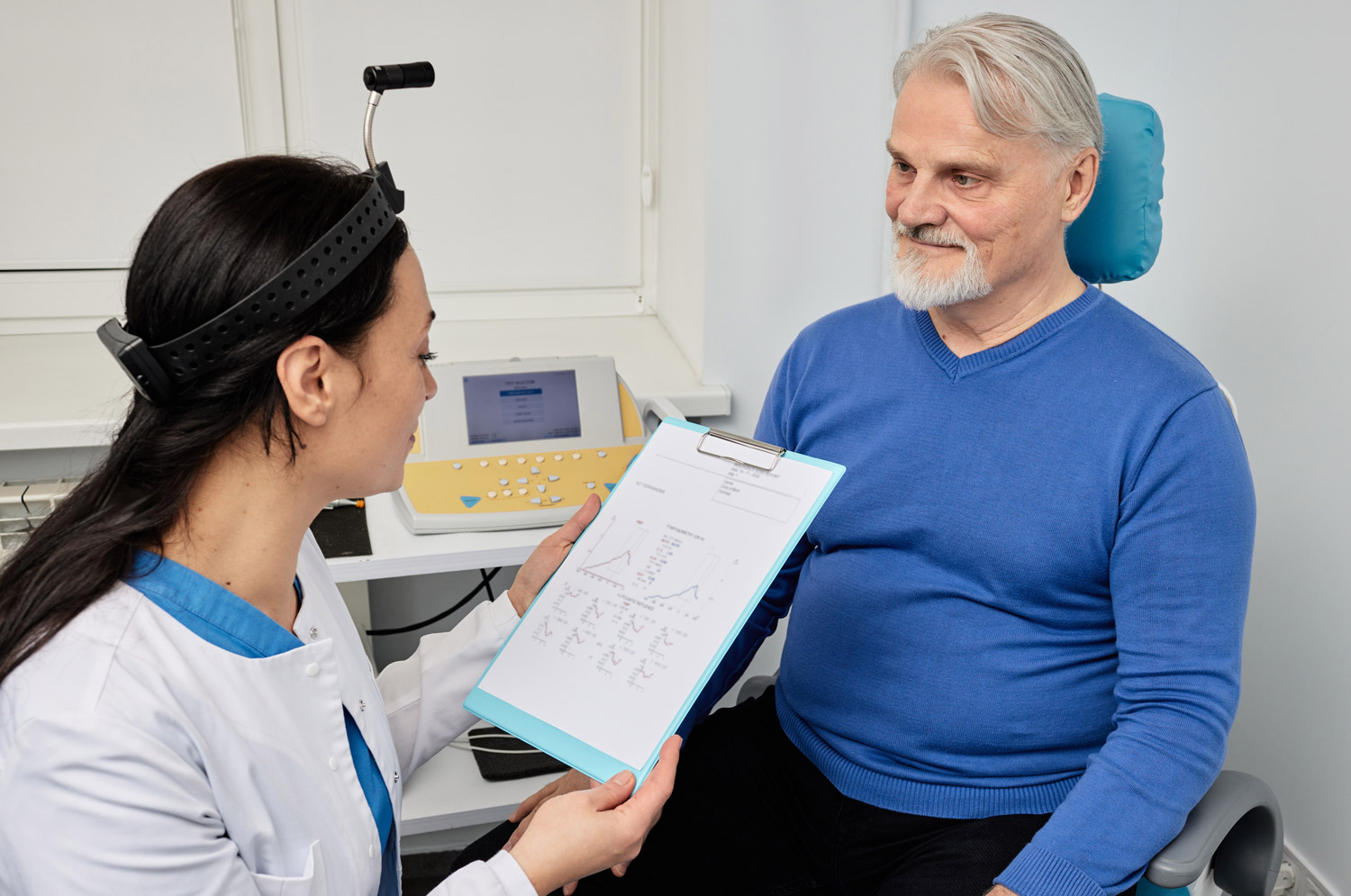
The appointment begins with a discussion about the listening problems noticed at home, school or work. This background helps the audiologist understand which situations are most difficult. A standard hearing evaluation may also be completed first.
The remaining tests examine how the brain handles different types of sound. They may include speech presented with background noise, competing information or small sound changes. The exact process depends on the person’s age, history and concerns.
Testing may look at how well someone can:
- Recognize and process speech sounds
- Understand speech in background noise
- Remember spoken information
- Combine auditory and visual information
- Keep spoken information in the correct order
The audiologist reviews the results together rather than relying on one score. The findings are compared with the concerns discussed before testing. This helps show where the listening process may be breaking down.

Understanding the Results
The results can identify which auditory skills are working well and which are causing difficulty. They may explain why someone communicates well in quiet settings but struggles in classrooms, meetings or group conversations. This information can guide the next steps.
Recommendations depend on the abilities identified during testing. Support may include auditory training, communication changes or adjustments at school or work. Assistive listening technology may also be considered when appropriate.
Big Thicket Hearing Aids & Audiology provides auditory processing evaluations for children and adults with ongoing listening concerns. Our audiologist examines how spoken information is understood beyond basic hearing levels. The results can help determine whether APD may be contributing to the difficulty.
Auditory Processing Disorder (APD) Treatment Protocol
APD patient or their parent schedules an appointment
Appointment #1 via Telehealth
Timeframe: 1 hour | Cost: $60
Patients will meet via Telehealth (Facetime for iPhone users or Zoom for Android users) or be scheduled in person, if preferred. During this appointment patient will share their story, challenges and goals.
Our Doctor of Audiology listens carefully, documents a detailed case history and then…
- Reviews evaluative questionnaires
- The Buffalo Model Questionnaire (adult or child)
- The Hearing Handicap Inventory
- Speech, Spatial, and Qualities of Hearing Scale
- Any others that are fitting (Tinnitus Handicap Inventory, Depression, Hyperacusis, etc.)
- Explains necessary appointments and payments
For a younger child (elementary school), we prefer their parent is on the call alone; for an older child (middle school or high school),
the parent decides if they want the child to participate
Appointment #2: In Office
Timeframe: 2 hours | Cost: $120
- Otoscopy
- Tympanometry
- Acoustic Reflexes
- Pure Tone Audiometry
- Speech Recognition Threshold
- Staggered Spondaic Word (SSW) test
- Phonemic Synthesis test/Phonemic Synthesis Picture Test
- Localization Clock
- Acoustic Pioneer Evaluation on iPad
- Central Institute for the Deaf (CID W-22) word list, right/left/binaural with and without noise
Auditory Processing Disorder Protocol
Appointment #3
Timeframe: 1 hour | Cost: $60
Telehealth or in-person for those who prefer it. The appointment will explain results and benefits of prescribed therapy. Patient will pay for interpretation time, report writing time and third appointment.
Interpretation of Results
Estimated Timeframe: 1 hour | Cost: $60
Recommendations Report Writing
Timeframe: 1 hour | Cost: $60